When AI Shops, Brands Still Matter
Connecting the CIMM Conference Topics to the Real World

Let’s imagine a future where people use AI agents to manage their product research and even purchasing decisions at scale. It’s not that far away and it begs the question: Who will brands advertise to in the future? My answer is simple: AI may change how people shop, but it does not change why they choose brands.
The CIMM Summit in New York this past week, as with any conference nowadays, had a recurring theme – AI. There was one panel that did not mention AI, that is until they congratulated themselves for not mentioning AI, and in the process mentioned AI.
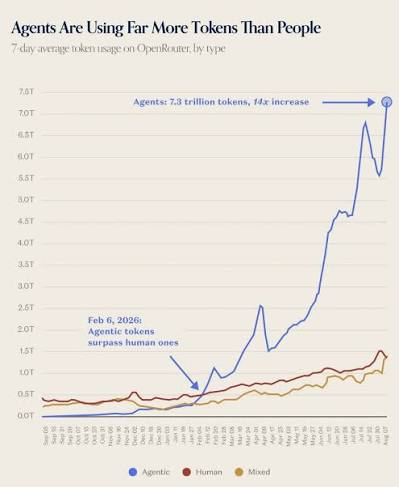
One speaker talked about how agents now consume 7x more tokens than humans and who knows what the advertising landscape is going to look like in 12 to 18 months because of this.
There was also an interesting panel where the question was posed about who will brands advertise to in an “agentic world” where consumers will let agents do product research and even make purchases for them. Does the agentic world mean that we now want to advertise to bots?
This panel and other presentations made me think hard about these questions and reflect on what we currently see in the market, what we know about how people make decisions, and what brands mean to people. As it happens, I’m currently replacing my everyday car, and I’ve enlisted the help of AI. This process has given me a first-hand experience of what the agentic future means for brands.
I started by providing some context around the reason for the purchase, like my driving habits, and the fact that I have an interest in cars, but I’m not the type of person that lives and breathes cars (these are all things that in a not-so-distant future, my personal agent would already know). I also provided a general price range I want to keep to.
What is interesting and revealing is what happened next. The context the AI had was not enough. I had to have a whole conversation about the type of car I wanted. Over the course of a dozen or so different prompts, we explored different SUVs and trucks I suggested as well as models that the AI thought had the same vibe. Then I stopped for a few days until it all came together. The discussion with the AI helped me realize what I was looking for in my next automobile. I wanted it to be fun but understated, with great performance but not an obvious choice.
In the end, I went in a completely different direction, not a truck or SUV at all. The final choice was not even something the AI recommended; it was a choice I realized through the conversation with the AI. I threw this new choice into the prompt asking the AI to compare it to other cars on different dimensions; both hard specs (e.g., engine specs) and soft specs (image related) we had discussed.
The experience was fascinating. I'm much more confident of the ultimate car that I've settled in searching for. And it wasn't a large time investment - in fact, I'd say it likely it would have taken me 10x the amount of time researching if I was doing this a few years ago. And the next step was amazing because now the AI has an agent doing a nationwide search to find the car that I’ve decided I want. Comparing the options, current price ranges, and historical pricing to help me negotiate the price with a seller.
My personal car buying journey made the AI discussions at CIMM extremely relevant. So, let’s think about what this purchase experience means for advertisers. Of course, the lower funnel part of the purchase process is completely upended. This is the part of the purchase journey that performance advertising is meant to impact. There is no doubt that performance advertising will be impacted by an agentic consumer world. The AI found and analyzed the specs, compared the options, and even provided a general sense of the “image” that fit with my “emotional” reasoning based on cars projected and suggested models.
Brands will absolutely want to make sure that the agents have a clear understanding of what the brand stands for and all the reasons to believe and what makes their product or service unique.
But what AI or the AI agent could not do was to answer the critical question: how do I want to feel when driving this car. Only I can do that. The emotional component to the decision was by far more important than any spec comparison. We know this from decades of advertising research. If it wasn’t important, brands would not be nearly as valuable as they are.
This emotional component completely changed the direction of both the chat and what the agent would do next. And I chose the brand and model that the agent is searching for not based on the product features or benefits – but on the equity that this particular car model has in my mind. An equity that was built over years and years of brand touchpoints, beautiful design, and technological innovation. Equity that makes me feel a certain way when I think about driving such a car.
In the end, I was the one that put the brand in the prompt. The chat with the AI was instrumental in me reaching that realization of a) what I want to feel when I drive this car and b) which brand is most aligned in my mind with that feeling.

The AI helped me discover what mattered, but I still had to decide what mattered.
As I see it, AI will make the rationalization process more efficient. It will give consumers options and ideas and it may even help expand the initial consideration set through discovery. But in the end, choosing a brand is an emotional decision. And AI agents cannot replace years of emotional connections that brands have established through brand building efforts. So brand building is going to be even more important in this agentic world. No matter how much an AI tells us that this product is “better” – if the brand is inconsistent with how we see ourselves as people – it’s unlikely we’ll have the agent make that decision for us and if they do, it will disappoint.
Different implications for performance marketing vs brand marketing
So, thinking ahead. As consumers start relying more heavily on AI agents, marketers should focus their efforts on how to deploy their performance marketing dollars more effectively to make sure the agents understand and have the latest most relevant information available for consumers to use to support the purchase decisions.
For brand advertising though, the implication is that brands that double down on maintaining and growing their equity in consumer’s minds will be the brands that win in this new agentic world. Strong brands are the ones that make it to the prompt.